
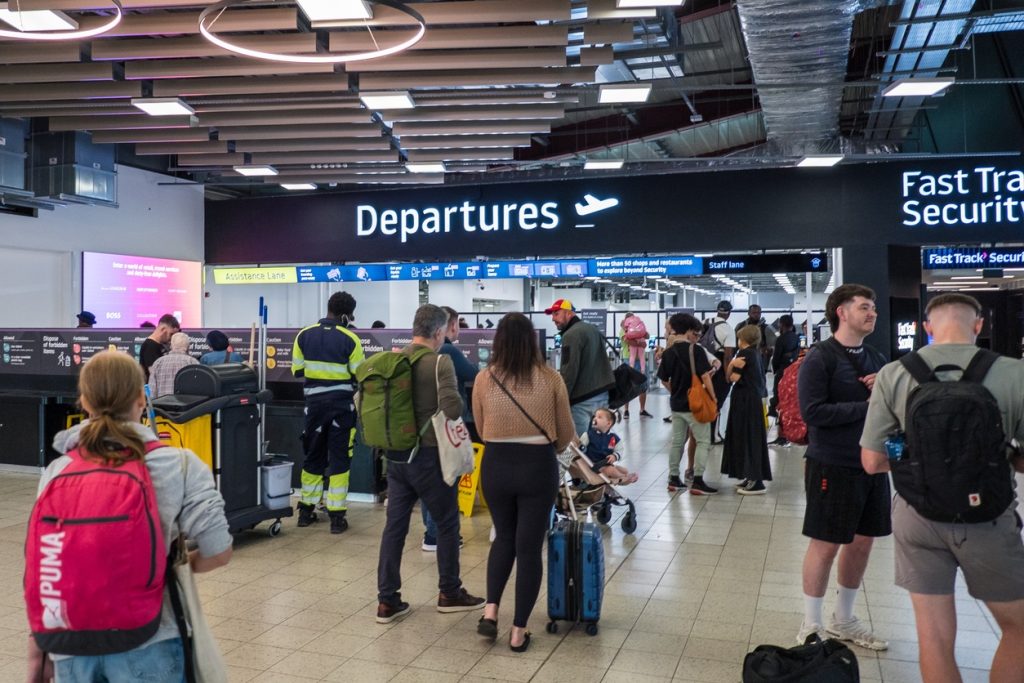
The festive season is one of the busiest – and most stressful – times of the year for international travel. This December is expected to be particularly challenging. The Civil Aviation Authority (CAA) forecasts that passenger numbers will exceed last year’s record 22 million travellers. Of that total, Heathrow, the UK’s busiest airport expects more than seven million passengers to pass through its four terminals this month alone.
Amid record-breaking traveller numbers, even small issues with passports, visas or digital status can lead to significant delays. To help ensure your journey goes as smoothly as possible, here is a practical guide for anyone travelling in or out of the UK this festive season.
- Check your passport validity now
Before you book or travel:
- Make sure your passport is valid for the entire trip and ideally six months after return date.
- If you changed your name recently but have not updated your passport, ensure all travel bookings are made in the name shown on your passport. You may also wish to carry supporting documents such as a marriage certificate.
- Ensure your passport has sufficient blank pages for entry and exit stamps – many countries will not stamp over existing markings.
- If you hold the nationality of the country you are entering, carry that passport (or national ID card if permitted), as many countries require their citizens to enter using their own nationality.
- Check your UK visa validity
It happens more often than people expect: travellers discover only at the border or at check-in that their visa has expired.
Before travelling:
- Check the expiry date of your visa and those of any dependants.
- If your visa expires shortly after your planned return, seek advice and plan accordingly. Applying for an extension before travelling may be necessary.
- Be careful if you have a pending visa application
This is one of the biggest festive-season pitfalls.
If your visa extension or switching application is still being processed by the Home Office, do not leave the UK without consulting an immigration practitioner.
If you depart the UK while your application is pending:
- Your application may automatically be treated as withdrawn, and
- This may affect your right to reside or work in the UK.
Always seek advice before travelling if you have an outstanding application.
- Make sure your eVisa details are correct
As the UK moves towards a fully digital border system, both carriers and Border Force will rely on your eVisa information to confirm your right to enter the UK.
To avoid last-minute issues, ensure your eVisa account is fully up to date with:
- Passport(s) or travel document(s)
- Name (including updates after marriage or divorce)
- Mobile phone number
- email address
- Home & postal address
Check that:
- Your current passport number is recorded in your UKVI account
- The name in your account matches your passport
- Any maiden/married name changes have been updated
- The passport you intend to travel on is linked to your digital status
This is a common problem area, particularly for those who use different surnames socially or for travel.
- Generate an “S” share code from your eVisa account
To avoid delays at check-in if airline staff cannot verify your status automatically, generate and carry an “S” share code (for “Status”).
- A share code is valid for 90 days.
- You can generate it ahead of time using the official UKVI service: https://www.gov.uk/evisa/view-evisa-get-share-code-prove-immigration-status
- Travelling with children
If travelling with dependants:
- Complete all the same checks on their passports, visas and eVisa details.
- If travelling without the other parent, consider carrying:
- The child’s birth certificate,
- Your marriage certificate (if applicable), and
- A letter from the other parent/legal guardian confirming consent for travel, including trip details and contact information.
Many countries perform enhanced checks when children travel with only one adult.
- Check transit visa requirements
Even if you are only changing planes, some nationalities require a transit visa – even when remaining airside.
This is particularly common for travellers passing through:
- UAE
- Qatar
- Turkey
- South Africa
- United States (which requires an ESTA or visa for all transits — no airside transit permitted)
- s
- Several major Asian hubs, depending on nationality and terminal arrangements
Transit-related boarding refusals are common at this time of year, so always check the requirements for every airport on your route – not just your final destination.
- Record All Your Travel Dates
If you are working towards Indefinite Leave to Remain (settlement) in the UK remember most work routes impose a 180-day absence limit per 12-month period. Festive and New Year trips can accumulate quickly;
- note the dates of entry and exit,
- Recalculate your total,
- Note that the days of travel out of and back into the UK do not count as absence days.
- For sponsored workers – ask HR to confirm your details are up to date
It is rare, but it does happen: a sponsored worker travels over the holidays and discovers at re-entry that UKVI records do not reflect their correct employer, position or work location.
This can occur, for example:
- After corporate acquisitions or restructures
- When job title or work location change
Even small administrative errors can cause disruption at the border. If you are sponsored, consider asking HR to confirm everything is correctly recorded before travelling.
A little preparation goes a long way
With record numbers expected to travel this month, the best way to avoid disruption is to understand the common pitfalls and prepare ahead of time. Ensuring your passport, visa and digital status are in order can make all the difference between a smooth journey and hours of stress at the airport.
If you have questions about your visa, digital status or travel plans, Brecher’s immigration team is here to help.
This update is for general purpose and guidance only and does not constitute legal advice. Specific legal advice should be taken before acting on any of the topics covered. No part of this update may be used, reproduced, stored or transmitted in any form, or by any means without the prior permission of Brecher LLP.